
2004 Lewis and Clark Nickel Value: Two Designs, One Opportunity
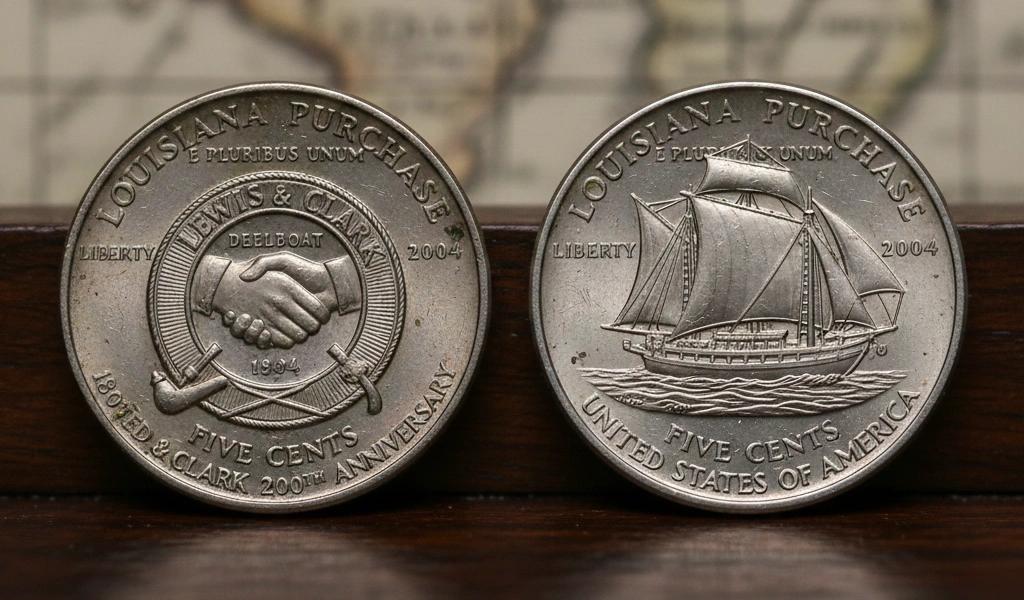
The first 2004 Lewis and Clark nickel design, released in 2004, shows a handshake, and people call it the Peace Medal design, while the second one arrived later in the year, displays a large boat, and this version is known as the Keelboat design.
Both kept the traditional image of Thomas Jefferson on the front side, and the portrait appeared the same as in previous years.
Feature | Description |
Composition | 75% Copper, 25% Nickel |
Weight | 5 grams |
Diameter | 21.21 mm |
Edge | Plain |
Mint Marks | P, D, S |
The United States Mint used a mix of copper and nickel to create a durable coin for daily transactions across the country.
Weights stay exactly at five grams, and this allows machines to identify these coins correctly without any mechanical errors.
Smooth edges distinguish nickels from dimes and quarters to provide a simple way for people to feel the difference in their pockets.
The Peace Medal Design Details
The Peace Medal nickel appeared in the early months of 2004, and it shows two hands shaking below a hat and a pipe.
This image was copied from the original medals given to Native American leaders during the long journey across the continent to represent friendship.
The words "Louisiana Purchase" and "1803" appear at the top of the coin, and they remind us of the land bought from France.
Artists working for the Mint simplified the original medal design to make it clear and easy to see on a small metal surface.
Many people saved these coins immediately after their release because they believed the value might increase significantly over time.
Mint Mark | Total Mintage |
Philadelphia (P) | 361,200,000 |
Denver (D) | 372,000,000 |
San Francisco (S) | 2,965,946 (Proof) |
High production numbers reached over seven hundred million coins total, and these figures prevent the regular versions from becoming very expensive.
The San Francisco Mint created special shiny versions for collectors, and they used polished dies and slow striking processes.
Holding these proof coins requires great care to avoid any fingerprints or scratches on the mirror-like surfaces.
The Keelboat Design Details
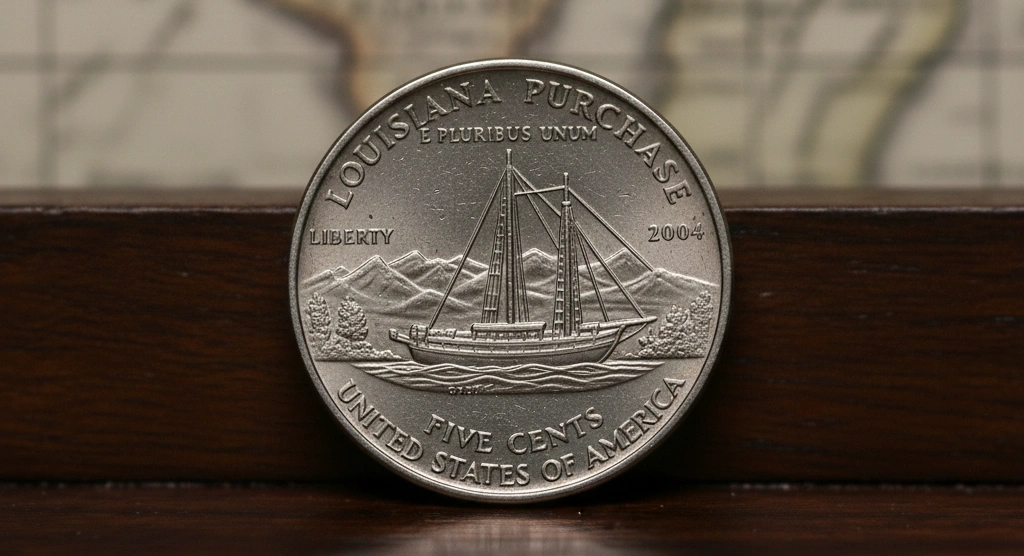
The Keelboat nickel entered circulation in late 2004, and it shows the large boat used by the explorers traveling up the Missouri River.
This design displays the sails and the oars of the boat to capture a specific moment from the historic expedition.
Captain Lewis and Captain Clark led their team through difficult waters, and they depended on this vessel to carry all their supplies.
The back of the coin features the boat, and it also includes the traditional words found on all American money.
Investors purchased large bags of these coins from banks, and they hoped to find perfect examples without any marks or spots.
Mint Mark | Total Mintage |
Philadelphia (P) | 366,720,000 |
Denver (D) | 344,880,000 |
San Francisco (S) | 2,965,946 (Proof) |
A comparison of the mintage numbers reveals a very similar supply for both the Peace Medal and the Keelboat designs.
Large quantities stayed in bank vaults for years, and they often came out into the market looking brand new.
Evaluating the Value of 2004 Nickels
The value of a 2004 nickel depends mostly on its condition and the presence of any rare errors.
Coins found in daily change are usually worth only five cents, and they attract interest mainly for their historical designs.
Uncirculated coins show no signs of wear from handling or pocket friction,n and they carry a higher price for serious collectors.
Professional grading companies check it with the coin identifier app for tiny scratches and the quality of the strike to assign a numerical score to the coin.
A coin receives a high score like MS67 or M, S68 and then it sells for much more money than a standard nickel.
Circulated Condition: These coins are worth only their face value of five cents, and they serve as good starting points for children.
Uncirculated Condition: Nickels kept in original rolls or mint sets are worth between fifty cents and two dollars to appeal to average collectors.
Proof Condition: Shiny coins from San Francisco sell for three to five dollars, and they usually come in protective plastic cases.
High-Grade Gems: Rare coins with perfect surfaces sell for over fifty dollars, and they require professional authentication.
Searching through original rolls of coins from 2004 provides an opportunity to find high-quality specimens.
Investors look for long-term growth, and they often buy these rolls to hope for a future increase in collector demand.
Common Errors and Varieties to Watch For
Sometimes the machines at the Mint make mistakes, and they create unique coins called errors.
Finding an error nickel potentially increases the value from five cents to several hundred dollars, depending on the type of mistake.
Die Cracks: Tiny raised lines appear on the coin surface to indicate the metal mold started to break during production.
Off-Center Strikes: Coins show only part of the design because the metal disk was not aligned correctly, and these represent a popular error type.
Double Dies: Images appear doubled on the coin because of a mistake during the creation of the die itself, and these attract many specialists.
Checking both sides of the coin carefully with a coin value checker app helps to identify these small but important differences.
Most errors occurring in 2004 remain small, and they are difficult to see without proper equipment and light.
Storing and Protecting Your 2004 Nickels
Proper storage prevents damage to the coin surface, and it ensures the value stays the same or grows over time.
Keeping coins in a cool and dry place avoids the development of dark spots or unwanted colors on the metal.
Coin Flips: Small plastic holders allow you to see both sides of the coin without touching the metal, and they provide basic protection.
Coin Tubes: Storing many nickels together in a plastic cylinder saves space, and it keeps them away from air and moisture.
Albums: Specialized books with holes for each specific coin help collectors to organize their sets and to track their progress.
Avoiding the use of tape or glue on coins prevents chemical reactions damaging the original finish of the nickel.
Handling coins by the edges with clean hands remains the best way to prevent oils from moving onto the surface.